Stanford Health Care MyHealth
- 4.4
- Rating
- 100.00K
- Installs
- Free
- Price

 Analysis by App-foxy
Stanford Health Care MyHealth is the kind of medical app I would install when I want a more direct way to manage care connected with Stanford Health Care. It is free, aimed at everyone, and developed by Stanford Health Care itself, so its purpose is clear: bring health-care tasks into a mobile setting instead of making every interaction depend on a phone call, a desktop browser, or a visit to a clinic.
My first impression is that this is a practical tool rather than an app you open for entertainment or general wellness advice. Its value depends on whether you receive care through Stanford Health Care. If you do, having a mobile route to your health-care information can make routine tasks easier to handle at the moment they matter. If you do not use that health system, the app is unlikely to become useful simply because it is well rated or free.
What to expect before you begin
The app sits in the medical category, and that distinction matters. It is not a replacement for emergency services, a diagnostic tool, or a general symptom checker. I would approach it as a patient-management companion: a place to take care of ordinary health-related tasks and keep track of interactions with the health system.
You May Also Like

 Blood Strike: 2.5 Anniversary
Blood Strike’s Loadouts Turn Every Drop Into a Tactical Gamble
A close look at Blood Strike’s custom loadouts: how fast access to signature weapons reshapes its battle royale rhythm, rewards preparation, and narrows the gap between fights.

 Pandora - Music & Podcasts
Pandora’s Music Is Easy to Start, but Harder to Recover
Pandora’s strength is its low-effort path from a seed to a station. Its weak spot is how much confidence it asks you to place in connection, setup, and quiet recovery.

 8 Ball Pool
 Is Built on Rivalries, Rematches, and Routine
A close look at the rivalries, rematches, shared routines, and unanswered safety questions that turn a quick pool match into a persistent mobile community.

 Samsung Music
’s Quiet Strength Is Playing What You Already Own
Its reach comes less from spectacle than from dependable access to a personal library. That simplicity is both the app’s strongest retention engine and its ceiling.

 AccuWeather: Weather Radar
AccuWeather Review: A Quick, Clear Forecast for Everyday Decisions
For everyday plans, the best forecast is the one you can understand quickly. AccuWeather makes rain timing, radar, and local conditions easy to act on, with a few trade-offs.

 Hill Climb Racing
Why Hill Climb Racing Still Turns Crashes Into One More Run
A tiny car, a bumpy hill and one more upgrade: Hill Climb Racing keeps resurfacing because its simple chaos makes every near-miss feel personal.
More From Our News Desk



Stanford Health Care MyHealth has reached over 100,000 installs and holds a 4.4 average from around 2,800 ratings, with roughly 1,100 written reviews. Those numbers suggest that many patients find it useful, but they do not guarantee that every person will have the same experience. Medical apps are especially dependent on account status, provider relationships, and the information available for a particular patient.
The app was released in December 2015 and is currently at version 12.0. It requires Android 10 or later, so I would check the operating system before trying to install it on an older phone. The age classification is Everyone, which makes sense for a patient-facing health-care app, although the information you access inside it is naturally personal and sensitive.
One important expectation to set is that the app is most valuable between appointments. A first-time user may be hoping for an instant answer to a health concern, but that is not the role I would assign to it. Its strength is reducing friction around an existing care relationship. Think of it as a digital front door to Stanford Health Care, not as a substitute for a clinician.
Who will get the most from it
I would recommend it first to current Stanford Health Care patients who want to manage routine care from a phone. It can be especially helpful for someone who dislikes keeping several paper notes, frequently forgets where appointment details are stored, or wants to deal with health-care administration outside office hours.
It may also suit family members who help another adult stay organized, provided they use the appropriate account and access arrangements. That situation requires extra care: sharing a phone or login casually can expose private medical information. The convenience is real, but it should not come at the cost of treating a personal health account like an ordinary social app.
I would skip it if your doctors and facilities are outside Stanford Health Care and you are looking for a universal health organizer. In that case, your provider’s own patient portal may be more relevant, while a general health app may be better for tracking habits or personal measurements. Installing this one without a connection to Stanford Health Care would probably create more confusion than value.
Getting through the first setup
My advice is to begin with the same information you would use for the health system’s patient access rather than treating setup like a new social account. Have your identifying details available, use an email address you check regularly, and slow down when reviewing account prompts. A medical profile is worth setting up carefully once instead of rushing and then having to correct access problems later.
The first meaningful decision is whether you already have an established Stanford Health Care patient account. If you do, look for the sign-in path that matches that existing relationship. Creating a second account out of impatience can make it harder to tell which profile contains your actual care information. If you are new to the system, follow the enrollment route offered in the app and keep any confirmation details in a secure place.
I would also set aside a few uninterrupted minutes for the initial process. A patient portal is not like a shopping app where you can browse immediately and fill in details later. The app needs to connect your mobile session with the right health-care identity, so small mismatches in names, contact details, or account information can become a source of delay.
Before signing in on a shared device, I would think about privacy. A locked phone, a private screen, and a habit of signing out when appropriate are simple safeguards. I would avoid leaving the app open while someone else is using the phone, particularly if notifications or account previews could reveal medical information.
The fastest route to a first useful result
Once access is working, I would not spend the first session wandering through every available area. I would choose one immediate task that solves a real problem, such as checking information connected with an upcoming interaction or reviewing something I previously had to search for elsewhere. The point is to prove that the account is connected correctly and that the app has practical value in my routine.
A good first workflow is to open the area related to your next planned piece of care, read the details slowly, and then decide what needs action. If something requires a follow-up, I would make a short note outside the app rather than assuming I will remember it. This small habit turns the app from a passive information shelf into part of a reliable preparation routine.
For an everyday example, imagine that I have an appointment coming up and usually keep the details in a mixture of email, paper reminders, and calendar entries. Instead of checking several places, I would use the app as the starting point, confirm the relevant information, and then add my own reminder to the phone calendar. That last step is useful because a patient app and a personal calendar serve different purposes: one reflects the health-care record, while the other helps me manage my day.
I would use the same approach before a conversation with a clinician. I could review the information available to me, write down questions, and keep the discussion focused. The app does not replace the appointment, but it can reduce the mental load of trying to remember every detail at the last minute.
Small habits that make the app more useful
The first useful habit is to check the app before calling about a routine question. This does not mean avoiding staff when help is needed. It means using the information already available to decide whether the issue is administrative, something that can wait for a normal channel, or something that deserves prompt professional attention.
The second is to treat the app as a preparation tool rather than only a record viewer. Before care, I would gather questions and note changes in my situation. After care, I would review what I need to remember and create personal reminders. This two-stage workflow is more effective than opening the app only when I am already stressed.
The third is to verify context before acting. Health information can involve multiple appointments, clinicians, or episodes of care. I would read dates and names carefully and avoid assuming that the first item I see is the one I need. That extra pause is particularly important when I am tired, managing care for someone else, or handling several medical matters at once.
A fourth useful trade-off is deciding what belongs in the app and what belongs elsewhere. I would rely on the patient portal for information tied to Stanford Health Care, but I would keep general reminders, transportation plans, questions for a visit, and household scheduling in tools designed for those jobs. Trying to force every part of health organization into one app usually makes the overall system less dependable.
Where first-time users may feel confused
The most common confusion is likely to come from the difference between having the app installed and having the correct patient access connected. Installation alone does not make a health record appear. If the first screen feels less immediately rewarding than a normal consumer app, I would not interpret that as failure. The important milestone is successful account access and the appearance of information relevant to my care.
Another possible friction point is expecting the app to answer urgent medical questions. I would not use a patient portal to decide whether a serious symptom is an emergency. For urgent or life-threatening situations, I would use the appropriate emergency or clinical channel instead of waiting for an app-based response. The app is most sensible for managing an ongoing relationship, not for replacing immediate medical judgment.
It is also easy to confuse a health-care record with a complete personal health diary. The app may be central to care at Stanford Health Care, but I would still keep my own concise list of medications, allergies, questions, and relevant history when preparing for an appointment. That personal backup helps when I am speaking with a provider outside the system or when I need to explain my situation quickly.
If information does not look the way I expect, I would first check whether I am in the correct account and whether I am looking at the right part of the patient experience. I would then use the official support route associated with Stanford Health Care rather than repeatedly guessing at login details. Repeated failed attempts are frustrating and can create avoidable access issues.
Notifications can also create the wrong expectations. I would treat a notification as a prompt to check the app, not as a complete explanation of a medical matter. Opening the relevant screen and reading the full context is safer than reacting to a short preview on the lock screen.
How it compares with ordinary alternatives
Compared with a desktop patient portal, the mobile app is more convenient when I am away from a computer or need to check something during a busy day. A browser can still feel better for long reading sessions, careful record review, or situations where a larger screen makes details easier to compare. I see the app and the web portal as complementary rather than competing tools.
Compared with calling a clinic, the app can reduce waiting for routine information and lets me approach a task when it suits me. The phone remains better when the situation is complicated, time-sensitive, or difficult to explain in a short message. A digital channel is not automatically more efficient when the issue requires back-and-forth clarification.
Compared with general wellness apps, this one has a narrower but more relevant purpose for Stanford patients. A fitness tracker or symptom journal may offer broader self-monitoring, but it will not serve the same role as a health-system portal. I would choose based on the job: Stanford Health Care MyHealth for connected care management, a wellness app for personal habits, and direct clinical contact when professional judgment is needed.
My recommendation after using it as a first-time patient
I like the app most when I use it with a clear intention. The strongest experience is not opening it just to explore; it is installing it before a real health-care task, completing access carefully, finding the information I need, and then creating any personal reminders that will help me follow through.
Its limitations are mostly about scope and dependency. It is not a universal health manager, it cannot replace urgent care, and its usefulness is tied to Stanford Health Care access. Users who expect a broad collection of wellness tools may find it too focused. Users who want every medical issue handled through a phone may also be disappointed, because some questions are better answered by a person.
For the right audience, though, that focus is a benefit. Stanford Health Care MyHealth gives current patients a practical mobile starting point for organizing their relationship with the health system. I would recommend installing it when you already receive care through Stanford Health Care, then judging it by one simple test: can it help you complete your next routine health-care task with fewer steps and less uncertainty?
My final advice is to begin before you urgently need it. Set up access while you are calm, confirm that you can reach the information relevant to you, and decide which tasks you will handle in the app versus by phone or in person. That preparation turns a free download into something genuinely useful, while keeping expectations realistic about what a patient portal can—and cannot—do.
Best suited to Stanford Health Care patients who want a dependable mobile route to routine care management.
FAQs for Stanford Health Care MyHealth
01What is the Stanford Health Care MyHealth app used for?
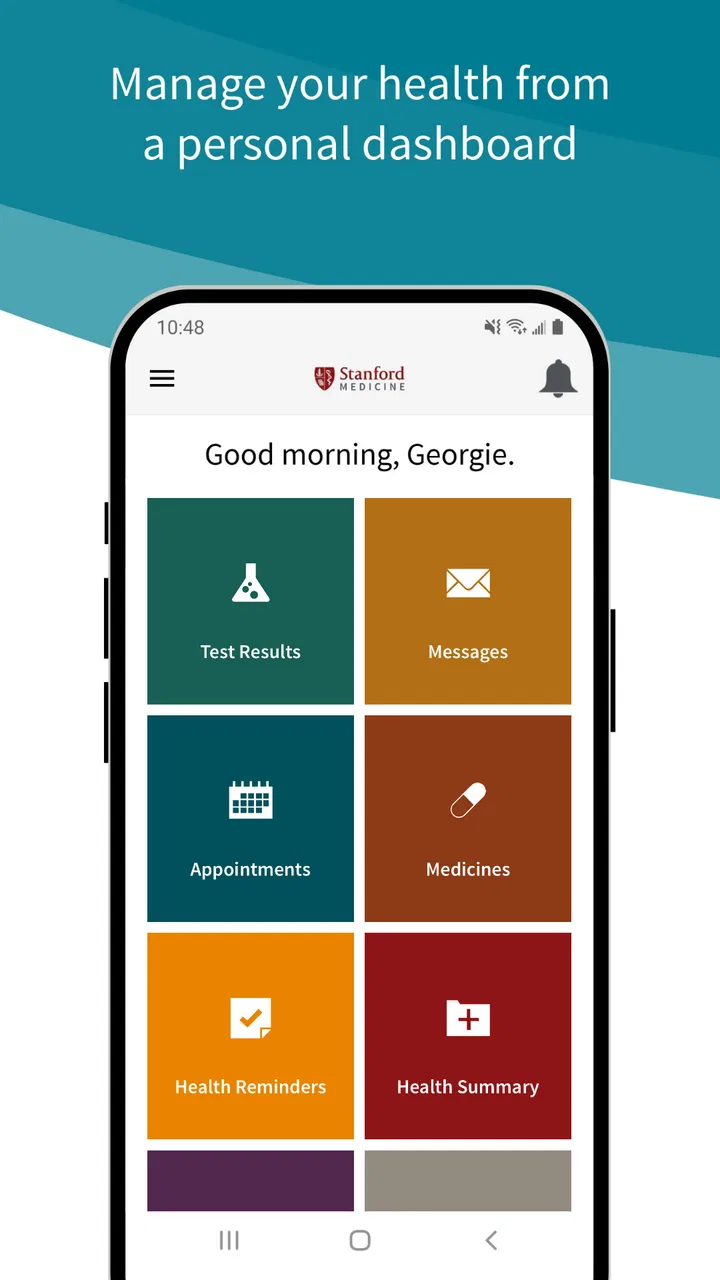
The Stanford Health Care MyHealth app is designed to provide patients with convenient access to their health information and manage their healthcare needs. Users can schedule appointments, view test results, communicate with their care team, and access personalized health resources, making it easier to stay informed and engaged with their medical care.
02How secure is my personal information on the MyHealth app?
Security is a top priority for the Stanford Health Care MyHealth app. It uses advanced encryption technologies to protect your personal and medical information. Additionally, users are required to log in with a secure username and password, and the app supports biometric authentication for added security, ensuring your data remains confidential.
03Can I schedule or manage appointments through the app?
Yes, the MyHealth app allows you to easily schedule new appointments and manage existing ones. You can view available time slots, choose your preferred appointment times, and receive reminders for upcoming visits. This feature helps streamline your healthcare management, reducing the need for phone calls and paperwork.
04Does the MyHealth app provide access to test results?
Absolutely, the MyHealth app offers quick access to your test results. Once your medical tests are processed, results are uploaded directly to the app, allowing you to review them at your convenience. This feature helps you stay informed about your health status and facilitates discussions with your healthcare provider.
05Is the MyHealth app compatible with both Android and iOS devices?
Yes, the Stanford Health Care MyHealth app is available for both Android and iOS devices. Users can download it from the Google Play Store or Apple App Store. The app is designed to provide a seamless experience across devices, ensuring that you can access your healthcare information anytime, anywhere.
Pros
- User-friendly interface for easy navigation.
- Comprehensive access to medical records.
- Secure messaging with healthcare providers.
- Convenient appointment scheduling feature.
- Integration with wearable health devices.
Cons
- Limited functionality during server maintenance.
- Occasional glitches in appointment reminders.
- Requires stable internet for smooth operation.
- Some features may have a learning curve.
- Limited customization options for notifications.

Stanford Health Care MyHealth
Gallery